2026-09-03 ·
Compassionate Hoarding Cleanup: Where to Start
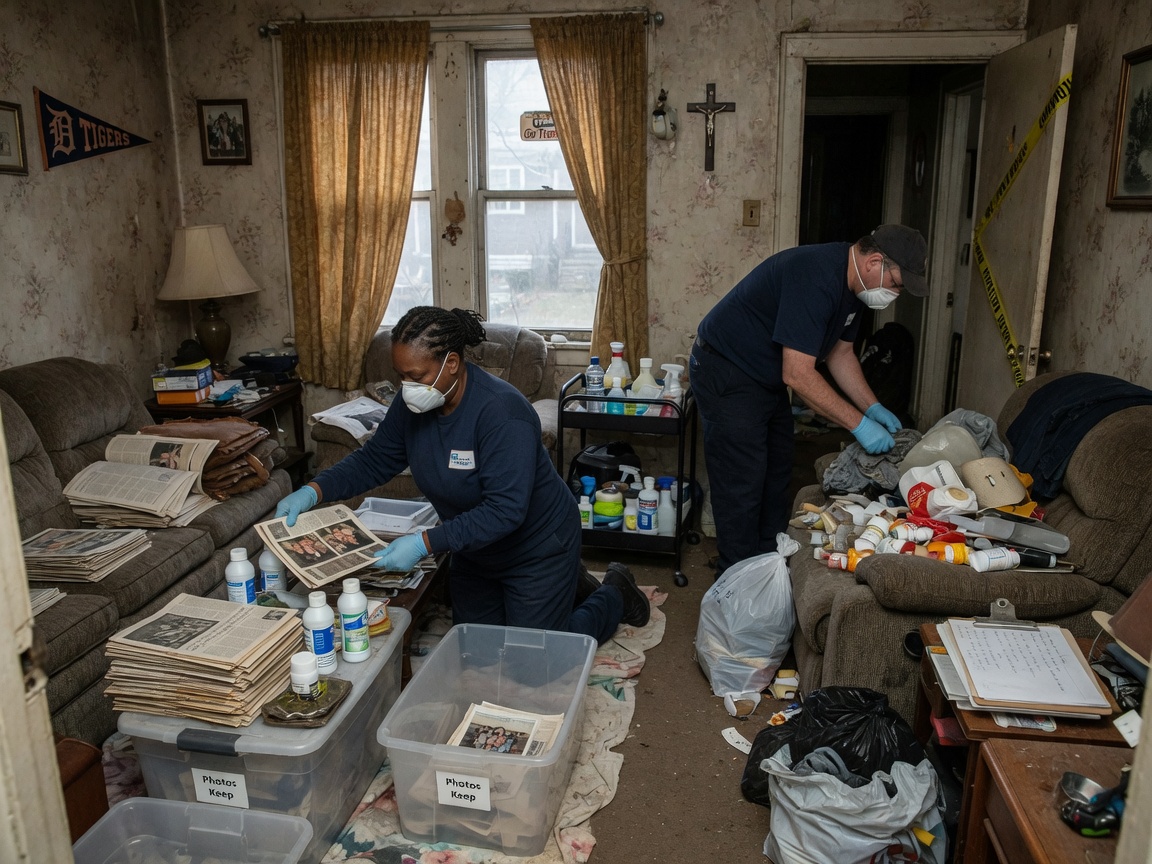
The first step in compassionate hoarding cleanup is to conduct a thorough safety assessment of the property, identifying biohazards and structural concerns before any physical work begins. In Detroit's older neighborhoods such as Boston-Edison and Woodbridge, many homes feature narrow stairwells, outdated electrical systems, and accumulated moisture from four distinct seasons that can worsen mold growth beneath clutter. Cold snowy winters followed by warm summers accelerate decay in these structures, making early detection of floor weaknesses or hidden waste critical. Professional crews based in Foxtown operate 24 hours, 7 days a week to respond when initial walkthroughs reveal immediate risks.
Identifying Biohazard and Structural Concerns
Detroit's housing stock from the early 1900s often includes plaster walls and hardwood floors that trap odors and fluids from long-term accumulation. In areas like Indian Village and Palmer Park, residents may encounter rodent activity or standing water in basements during spring thaws, which complicates hoarding situations by introducing additional pathogens. Begin by documenting visible waste piles, checking for soft spots in flooring, and noting any strong odors that suggest decomposition. These observations guide whether the job requires specialized equipment for blood or waste removal. Wayne County properties near Hamtramck frequently face similar issues due to shared lot lines that limit access for heavy machinery.
A practical next action involves photographing each room while wearing protective gear to avoid direct contact. This record helps prioritize which sections pose the highest risk, such as bathrooms where leaks have soaked through accumulated items. Four-season temperature swings in Detroit can cause pipes to burst in winter, spreading contaminants further into hoarded materials. Crews familiar with these conditions focus on stabilizing the environment before sorting begins, preventing cross-contamination between rooms.
Coordinating with Local Support Resources
Once hazards are mapped, reach out to specialized services that handle the biohazard component directly. The Hoarding & Clutter Cleanup team coordinates with mental health professionals to maintain a respectful pace throughout the process. In neighborhoods such as Corktown and Eastern Market, narrow streets and limited parking require advance planning for equipment delivery. This coordination prevents delays when winter snow restricts access to alleys behind homes.
Discussing the scope with family members or designated advocates ensures decisions align with the individual's needs. Concrete steps include setting up a staging area outside the home for sorting decisions and arranging temporary storage for salvageable items. Properties in Midtown often sit close to landmarks like the Detroit Institute of Arts, where increased foot traffic demands discreet vehicle placement during daytime hours. The goal remains protecting both the occupants and the surrounding community from exposure.
Executing the Cleanup in Phases
Work proceeds room by room after the initial assessment, starting with the most contaminated zones to contain odors and particles. In Wayne County homes, heavy snow loads on roofs during winter can stress already compromised ceilings, so crews inspect overhead structures before removing floor-level debris. Warm summer months increase insect activity around Eastern Market properties, requiring sealed containers for waste transport. Each phase includes HEPA filtration to manage airborne contaminants stirred up during sorting.
After clearing visible items, deep cleaning addresses embedded residues on surfaces. This includes treating subfloors in older Detroit homes where decades of buildup have penetrated wood grain. The The Importance of Permanent Odor Removal After a Traumatic Event article details why standard cleaning falls short in these environments. Final walkthroughs verify that all pathways remain clear and that HVAC systems receive separate attention to prevent recirculation of particles.
Ongoing monitoring follows the main effort, especially in areas like Mexicantown where humidity from the Detroit River influences drying times. Crews return as needed to confirm that treated spaces stay stable through seasonal changes. This measured approach respects the emotional weight of the situation while delivering thorough results grounded in the realities of Detroit's built environment.