2026-09-03 ·
The Importance of Permanent Odor Removal After a Traumatic Event
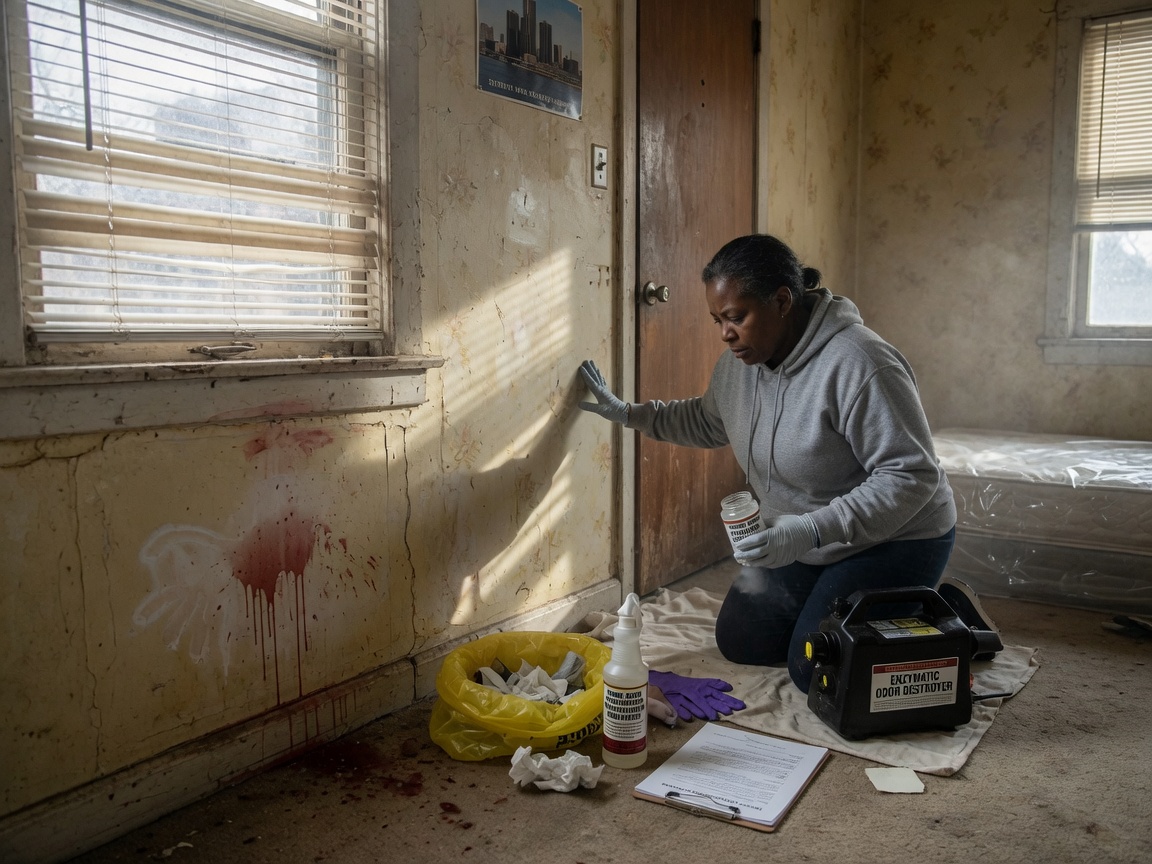
Permanent odor removal after a traumatic event such as homicide cleanup requires enzymatic treatments and targeted extraction that reach subfloor layers and wall cavities, because surface cleaning alone allows proteins to reactivate when Detroit humidity rises above 60 percent in summer or when melting snow drives moisture into basements.
Why Standard Cleaning Leaves Lingering Odors
In neighborhoods like Midtown and Corktown, many homes built before 1940 contain plaster walls and hardwood floors that absorb fluids during incidents. These materials hold microscopic particles that standard detergents cannot break down. When warm summer air meets residual moisture, the compounds volatilize again, creating noticeable smells weeks later. Detroit winters compound the issue as frozen ground slows evaporation and forces crews to work around ice buildup in crawl spaces. Without oxidation or enzyme application at the molecular level, odors migrate through HVAC ducts common in Boston-Edison residences. Severe Odor Removal protocols use pH-adjusted solutions calibrated for these older substrates rather than generic cleaners.
How Detroit Climate Affects Odor Persistence
Wayne County experiences four distinct seasons that directly influence bio odor behavior. Cold snowy winters keep fluids frozen inside wall voids until spring thaw, allowing seepage into concrete slabs found in Indian Village basements. Warm summers then accelerate bacterial growth on any remaining organic matter. Homes near Eastern Market or Palmer Park often sit on clay-heavy soil that retains water longer, increasing the chance that odors travel upward through floorboards. Crews based in Foxtown respond 24 hours a day, 7 days a week to address these seasonal windows before moisture cycles lock residues deeper. Temperature swings of 40 degrees between day and night can reopen sealed surfaces if the initial treatment did not reach saturation points in porous materials.
Odor Pathways in Local Housing Stock
Wood-frame construction prevalent in Corktown and Mexicantown allows fluids to wick along joists for several feet beyond the visible incident area. In Dearborn and Hamtramck properties, older plaster and lath systems trap particles that later release when heating systems cycle on during winter. Concrete block foundations common near Campus Martius Park absorb liquids that standard mopping misses, requiring concrete etching and sealing after extraction. These pathways explain why odors reappear in adjacent rooms or upper floors months after the event. Proper mapping of fluid migration using moisture meters prevents incomplete remediation that leaves families dealing with recurring smells.
Steps for Effective Permanent Removal
Technicians begin by isolating the affected zone to protect unaffected areas in multi-unit buildings common in Midtown. They then apply protein-specific enzymes that digest remaining organic matter rather than masking it. Extraction follows with negative air machines to pull loosened particles from cavities. Oxidation treatments neutralize any surviving compounds on non-porous surfaces such as tile in Eastern Market lofts. Final verification includes air sampling to confirm levels stay below detectable thresholds even after simulated humidity changes. Blood & Biohazard Removal teams coordinate these steps with local first responders to maintain chain-of-custody documentation when required.
When to Involve Specialized Services
Homeowners facing recurring smells after an initial cleanup should request a second assessment focused on hidden reservoirs. Properties in Woodbridge or University District often have finished basements where odors hide behind drywall installed after prior water events. Linking to resources like Who Pays for Crime Scene Cleanup in Michigan? helps clarify coverage options while crews handle the technical work. Early intervention during the first 48 hours after an event reduces the volume of material that must be removed, limiting structural disruption in historic homes throughout the county.