2026-09-03 ·
The Step-by-Step Process of Professional Biohazard Remediation
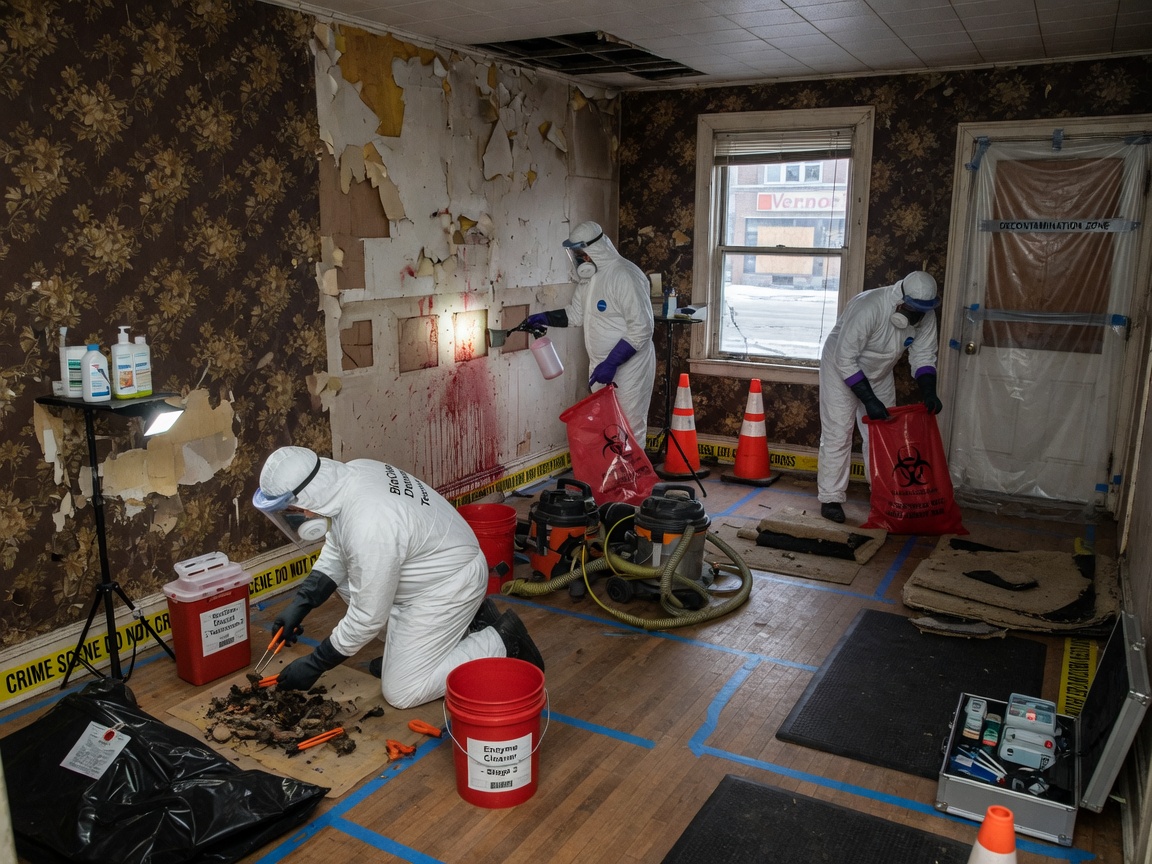
Professional biohazard remediation follows a repeatable sequence of evaluation, containment, removal, cleaning, disinfection, and verification that crews apply on every homicide cleanup and trauma scene cleanup call in Detroit.
Scene Evaluation and Containment
Crews arriving from Foxtown first walk the property with the reporting party to identify all affected surfaces and materials. In Wayne County homes built before 1950, common in Boston-Edison and Woodbridge, blood often migrates through wide plank flooring into subfloors and joists. Snow accumulation during cold months can block exterior access points, so teams stage equipment inside garages or on cleared driveways before sealing doorways with 6-mil poly sheeting. This step prevents cross-contamination into unaffected rooms and establishes negative air flow using portable HEPA units. Documentation includes photographs and written notes that later support insurance or legal review.
Material Removal and Packaging
Once contained, technicians remove porous items such as carpet, drywall, and insulation that cannot be restored. In Midtown apartments or Eastern Market lofts with concrete subfloors, crews use floor grinders to cut out stained sections rather than attempting surface cleaning alone. All waste is double-bagged in labeled biohazard containers and transported directly to permitted disposal facilities serving the Detroit metro region. Nearby cities like Dearborn and Hamtramck share the same disposal routes, so route planning accounts for traffic around Comerica Park and Ford Field during evening events. Non-porous items receive initial surface cleaning before disinfection begins.
Cleaning and Disinfection Protocols
After bulk removal, crews apply EPA-registered disinfectants using electrostatic sprayers and manual wiping on remaining hard surfaces. Warm summer temperatures in Detroit accelerate bacterial growth on untreated areas, requiring shorter dwell times and more frequent solution changes. In Palmer Park or Mexicantown bungalows with finished basements, teams pay extra attention to HVAC registers and sump pits where odors can linger. See our Blood & Biohazard Removal page for equipment specifics used on these jobs. All rinse water is collected and disposed as regulated waste rather than poured into municipal drains.
Odor Neutralization and Verification
Final odor control often requires pairing thermal fogging with hydroxyl generators when blood has soaked into plaster or lathe. In Corktown row houses, shared walls can carry odors into adjoining units, so crews test adjacent spaces with handheld meters before signing off. Verification includes ATP swab testing and visual inspection under alternate light sources. Homeowners in Indian Village frequently request written clearance letters for real-estate transactions. For questions about payment responsibilities under Michigan law, readers can review Who Pays for Crime Scene Cleanup in Michigan?.
Post-Job Site Restoration Guidance
After clearance, property owners receive a written scope of work that lists every surface treated and materials removed. This document helps coordinate with restoration contractors for drywall replacement or flooring installation. In University District homes near the Detroit Institute of Arts, crews advise on temporary board-up options when windows must remain open for drying. What to Do While Waiting for a Trauma Cleanup Crew offers practical checklists residents follow during the initial response window. Teams remain available 24 hours, 7 days a week for follow-up questions once the scene is released.