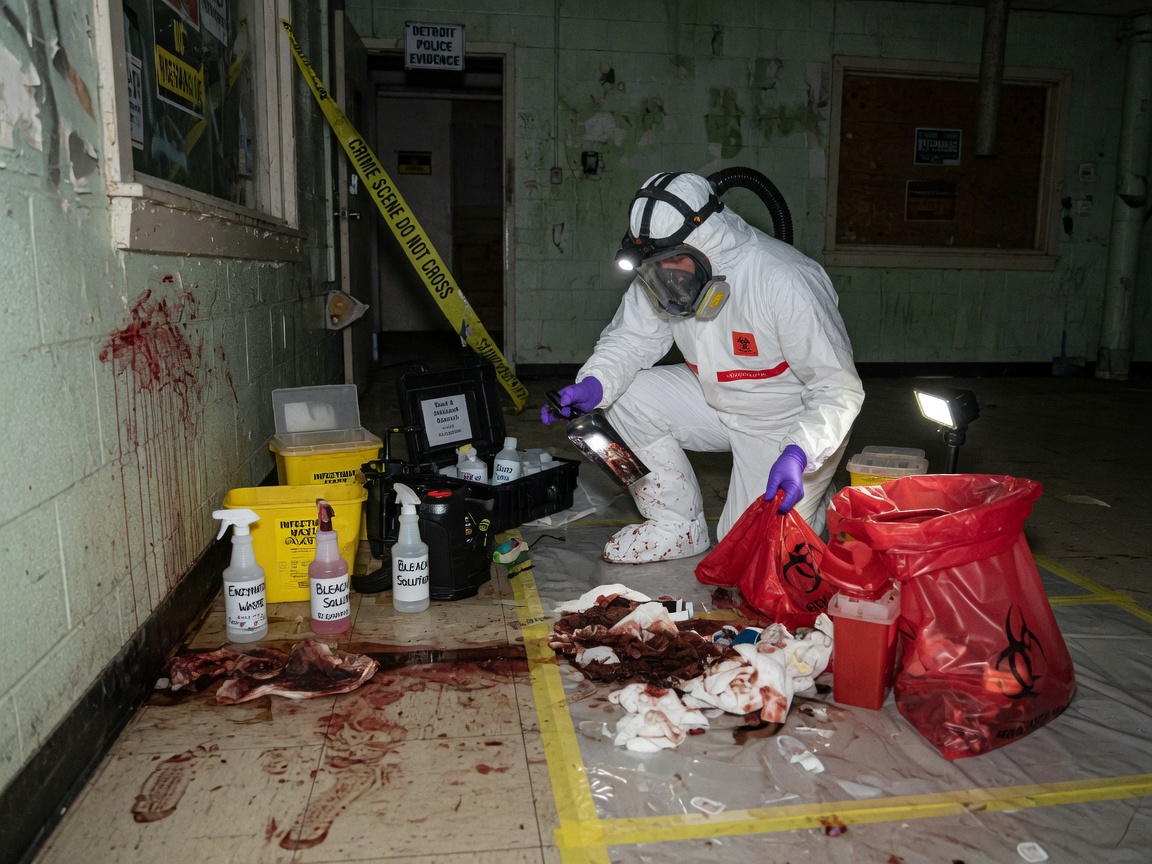
Detroit's older homes in neighborhoods like Boston-Edison and Woodbridge often feature porous hardwood floors, plaster walls, and subflooring that readily absorb blood and other fluids, requiring full removal of affected layers rather than surface cleaning alone. Winter snow and freeze-thaw cycles in Wayne County can trap biohazards under ice or push fluids deeper into foundations, while summer humidity accelerates bacterial growth on untreated surfaces. Technicians must account for these conditions when containing scenes in tight urban lots near Eastern Market or Indian Village.
Vehicle interiors and attached garages common in Hamtramck and Dearborn properties present confined-space challenges where blood can seep into seat foam, carpet padding, and trunk liners. Proper removal follows strict Michigan biohazard transport rules, with all contaminated materials double-bagged and taken to approved disposal sites rather than standard landfills. Edge cases include multi-story homes where fluids migrate through floor joists, demanding inspection of ceilings below the primary scene.
Odor control after homicide cleanup requires addressing both surface and embedded sources in materials like carpet padding and drywall that retain proteins even after visible stains are gone. Crews use enzyme treatments followed by negative-air machines to prevent lingering smells from affecting adjacent units in Midtown apartments or Corktown row houses. Homeowners should avoid DIY attempts with household cleaners, which can spread pathogens or set proteins permanently into porous surfaces.
Scene documentation includes photographs and chain-of-custody logs for any items removed, especially when working near landmarks such as the Detroit Institute of Arts or Campus Martius Park where privacy and discretion remain essential. Post-cleanup verification focuses on ATP testing to confirm reduction of biological residue before re-occupancy.
Technician insight
In Detroit, the thing that catches most people out with Blood & Biohazard Removal is how quickly blood soaks into the wide oak planks and horsehair plaster found in Boston-Edison and Woodbridge homes; once it reaches the subfloor, a simple wipe-down fails and winter freeze-thaw cycles push it even deeper before we arrive.
Corktown Row House Incident
Blood had migrated through second-floor hardwood into the dining room ceiling below after a winter homicide. We opened the ceiling, removed saturated plaster and joists, treated the remaining structure, and confirmed clearance before the family returned.
Blood & Biohazard Removal Services We Offer
✓Homicide Scene Decontamination
Complete removal of blood and tissue from residential interiors, with targeted extraction from hardwood and subfloors common in Boston-Edison homes.
✓Blood Stain Removal From Flooring
Extraction of dried and pooled blood from oak and pine floors plus joist inspection in older Detroit properties where fluids migrate downward.
✓Trauma Scene Sanitization
Full-room treatment including walls, fixtures, and HVAC returns after incidents in Midtown apartments or Corktown row houses.
✓Vehicle Biohazard Cleanup
Interior and trunk decontamination of passenger cars and trucks, addressing foam and carpet saturation often seen in Dearborn and Hamtramck incidents.
✓Biohazard Waste Disposal
Licensed transport and documentation of contaminated materials to approved Wayne County facilities following every homicide response.
✓Odor Elimination After Trauma
Enzyme application and air scrubbing to neutralize protein odors embedded in drywall and insulation within Palmer Park and Woodbridge homes.
Blood & Biohazard Removal Cost in Detroit, MI
| Service | Typical Range | What Affects It |
|---|---|---|
| Single-room blood cleanup | $1,200–$2,800 | Higher when fluids reach subfloors in pre-1940 homes |
| Vehicle interior decontamination | $450–$950 | Depends on trunk and seat foam saturation |
| Multi-room trauma sanitization | $2,500–$5,500 | Increases with odor migration into HVAC or adjacent units |
| Winter scene response add-on | $300–$600 | Ice removal and heated containment required |
Ranges are typical for Detroit, MI and confirmed with an exact written quote before any work starts.
How it works
- 1
Initial Assessment
Technician evaluates the full extent of contamination, noting migration paths through older floor systems and any weather-related complications such as frozen surfaces.
- 2
Containment Setup
Plastic barriers and negative pressure are established to protect unaffected areas in multi-unit buildings or attached garages.
- 3
Material Removal
Affected flooring, drywall, and furnishings are cut out and double-bagged for transport, with subfloor testing in historic Detroit homes.
- 4
Sanitization and Verification
Enzyme cleaners and disinfectants are applied, followed by ATP testing to confirm biological residue has been reduced before re-entry.
Pricing
Pricing varies by scene size, depth of fluid migration into older flooring, and seasonal access challenges.