2026-09-03 ·
Understanding Michigan Regulations for Medical Waste Disposal
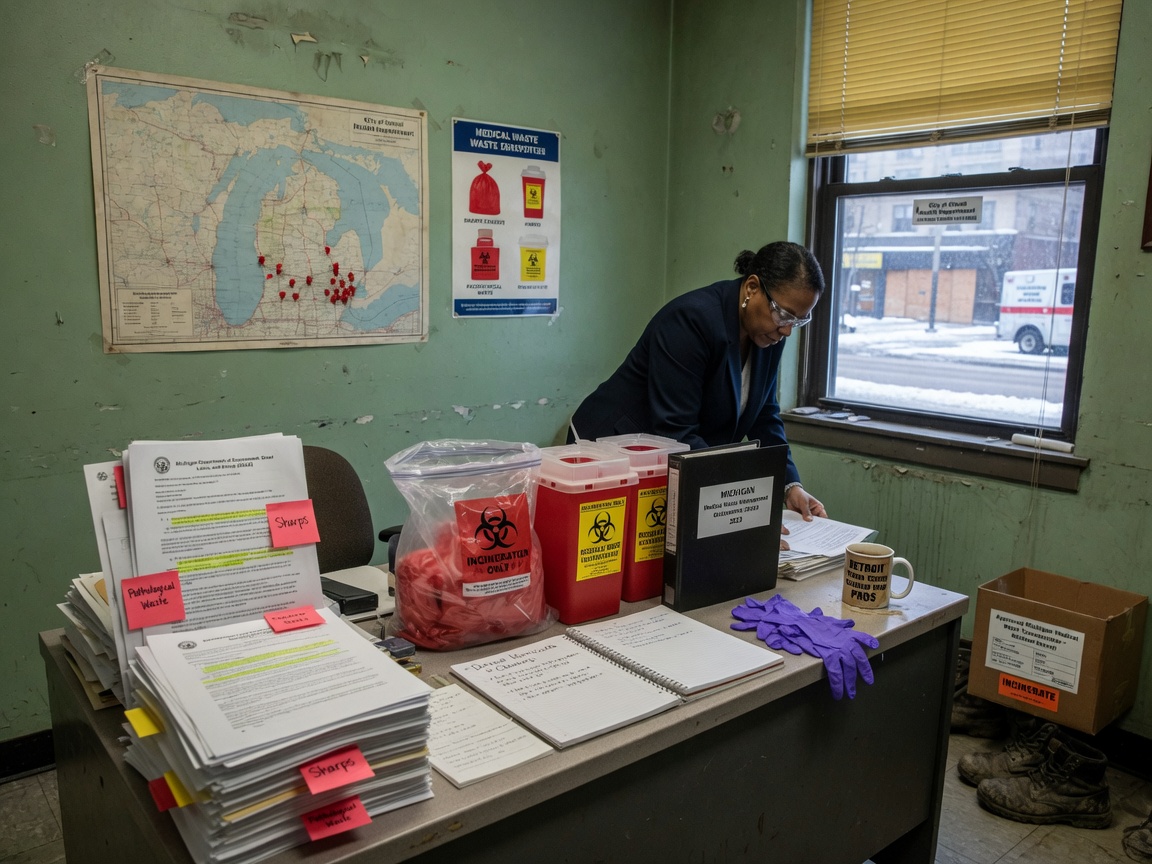
Michigan requires every generator of medical waste from homicide or trauma scenes to register with the Department of Environment, Great Lakes, and Energy before any material leaves the site. Registration triggers mandatory tracking forms, labeled containers, and use of permitted transporters that deliver waste only to approved treatment facilities. In Wayne County this applies whether the incident occurs in a 1920s brick home in Boston-Edison or a newer build near Comerica Park.
Generator Registration and Recordkeeping
Any business or individual who produces more than 200 pounds of medical waste per month must file an initial registration and renew annually. Records of each pickup, including the transporter’s license number and destination facility, must be kept for three years. Detroit crews often handle smaller volumes from single-family homes in Corktown or Indian Village yet still maintain the same documentation because state inspectors do not distinguish by volume once a homicide scene is declared biohazardous. Failure to register can halt work until compliance is shown, especially during winter when snow delays inspections.
Segregation, Packaging, and On-Site Storage
All blood-soaked materials, sharps, and human tissue must be placed in rigid, leak-proof containers labeled with the biohazard symbol and the words “Medical Waste.” Sharps go into puncture-resistant boxes; soft waste fits in red bags inside secondary containment. In Detroit’s older housing stock, crews frequently work in basements where spring thaw or heavy snowmelt raises humidity, so containers are elevated on pallets to prevent moisture damage. Storage on site is limited to seven days unless refrigerated at 4 °C or below, a rule that matters during July heat waves when outdoor sheds exceed safe temperatures.
Transportation and Final Disposal Rules
Only permitted haulers may move medical waste from a Detroit address to a treatment facility. Vehicles must carry spill kits and manifest forms that list the exact weight and type of waste. Most material from Wayne County scenes travels to incinerators or autoclaves outside the metro area. Crews coordinate pickups within 24 hours when possible, especially after events in high-traffic zones near Eastern Market or Campus Martius Park where public exposure risk is higher. Crime Scene Decontamination teams follow these same transport timelines to keep projects moving.
Weather and Terrain Impacts on Compliance
Four distinct seasons change how regulations are applied on the ground. Winter snow in Palmer Park or Woodbridge can block driveway access, forcing crews to stage containers on cleared sidewalks while still meeting the seven-day storage limit. Summer humidity in Midtown row houses accelerates odor and bacterial growth, requiring faster packaging and more frequent container changes. Flood-prone zones near the Detroit River add another layer: any water contact with waste triggers additional containment steps to avoid runoff violations. These local conditions make strict adherence to labeling and timing non-negotiable.
Connecting Regulations to Daily Field Practice
Understanding these rules helps property owners know what to expect when a trauma scene occurs. Proper segregation at the source reduces cross-contamination and keeps disposal costs predictable. The Step-by-Step Process of Professional Biohazard Remediation outlines how Detroit teams integrate state paperwork into each phase without delaying physical cleanup. When questions arise about a specific address in Dearborn or Hamtramck, crews consult the same EGLE guidance used for all Wayne County jobs.