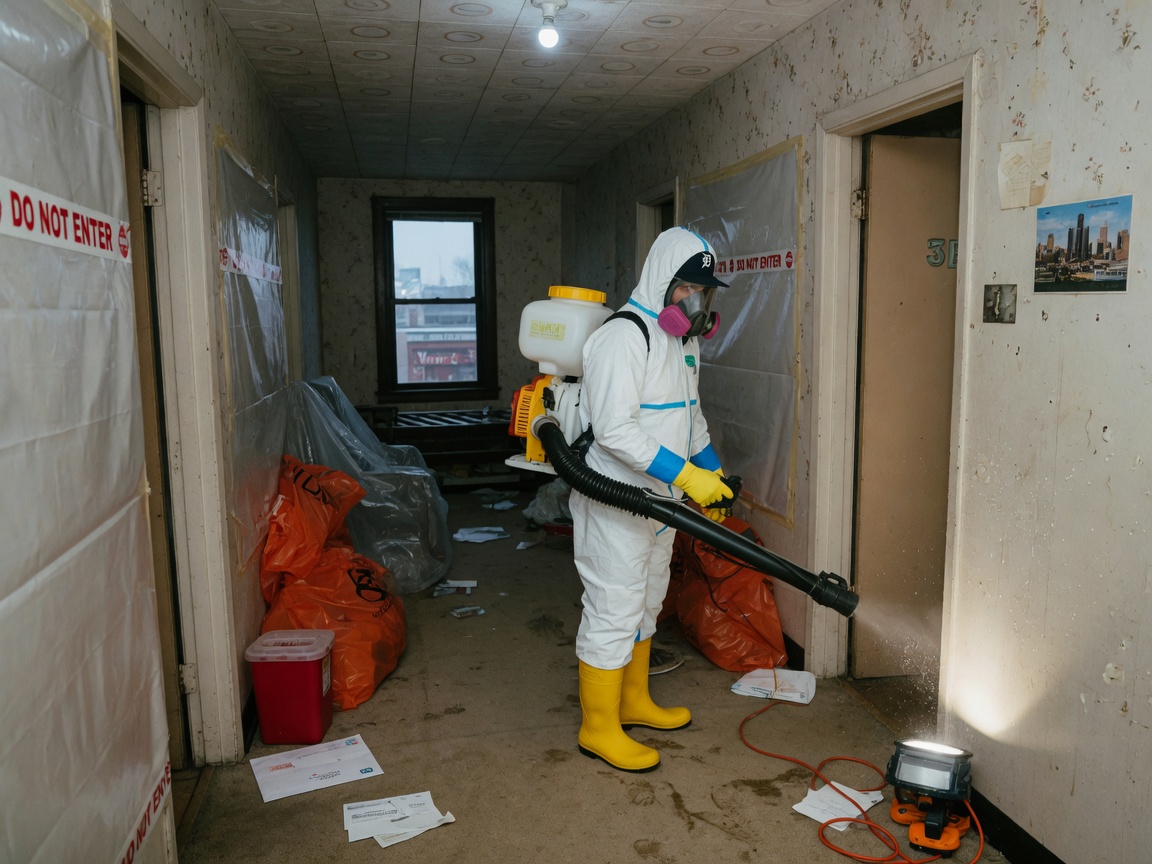
Detroit homes built before 1950 in neighborhoods like Boston-Edison and Indian Village often feature lath-and-plaster walls and oak floors that absorb blood and other fluids carrying pathogens. Cold winter temperatures slow disinfectant dwell times and increase condensation risks inside unheated structures, while summer humidity in Wayne County can promote bacterial regrowth on porous surfaces if drying is incomplete. Technicians must account for these seasonal shifts when selecting EPA-registered products that remain effective on aged materials without damaging historic finishes.
Eastern Market and Mexicantown properties frequently include commercial-grade concrete or tile that requires different application methods than residential carpet or drywall. After a homicide, hidden contamination can migrate through floor joists into basements common in Woodbridge and Palmer Park homes, demanding targeted injection of disinfectants rather than surface wiping alone. Failure to address these paths leaves viable viruses or bacteria that reactivate once temperatures rise.
Foxtown-based crews carry hospital-grade quaternary ammonium and bleach solutions rated for bloodborne pathogens, applying them with measured contact times verified by adenosine triphosphate testing. Disposal follows Wayne County regulations for regulated medical waste, with transport logs retained for each job. Crews avoid shortcuts that leave residue capable of corroding metal fixtures in older Corktown row houses.
Four distinct seasons affect every step: frozen ground in January limits exterior staging areas near Belle Isle Park, while heavy summer rain can flood low-lying lots in Hamtramck and force indoor containment adjustments.
Technician insight
In Detroit, the thing that catches most people out with Infectious Disease Disinfection is the age of housing stock in neighborhoods like Woodbridge and Corktown, where 1920s plaster and oak absorb fluids that freeze in winter and require extra product and time once temperatures rise.
Corktown Row House After Incident
Blood had seeped between floorboards into the basement joists of a 1920s Corktown home. We mapped the migration path, contained the upper and lower levels, then injected disinfectant into the voids while treating all surfaces. ATP readings cleared the property after one follow-up visit.
Infectious Disease Disinfection Services We Offer
✓Bloodborne Pathogen Disinfection
Targets fluids from homicide scenes using EPA-registered agents on porous and non-porous surfaces common in Detroit's older housing stock.
✓MRSA and Bacterial Remediation
Applies targeted protocols for antibiotic-resistant bacteria left behind in trauma scenes across Midtown apartments and Corktown homes.
✓Viral Outbreak Surface Treatment
Neutralizes viruses on high-touch areas and hidden voids in Eastern Market commercial buildings and nearby residential properties.
✓Post-Incident Odor and Residue Removal
Eliminates lingering biological odors and staining after disinfection in Indian Village and Boston-Edison residences.
✓Basement and Crawlspace Decontamination
Addresses fluid migration through floor systems in Woodbridge and Palmer Park homes where older foundations trap contaminants.
Infectious Disease Disinfection Cost in Detroit, MI
| Service | Typical Range | What Affects It |
|---|---|---|
| Single-room disinfection | $650–$1,200 | Higher when plaster or hardwood requires extended dwell times |
| Multi-room or basement job | $1,400–$2,800 | Depends on fluid migration into joists and crawlspaces |
| Commercial space treatment | $900–$2,100 | Eastern Market tile and concrete jobs often cost less than residential carpet |
Ranges are typical for Detroit, MI and confirmed with an exact written quote before any work starts.
How it works
- 1
Scene Assessment
Technicians inspect all affected rooms, identify porous materials, and map hidden paths in Detroit's older homes.
- 2
Containment Setup
Negative air machines and barriers isolate the work zone to prevent cross-contamination into unaffected areas.
- 3
Disinfectant Application
EPA-registered products are applied with required dwell times on every surface and void.
- 4
Verification and Clearance
ATP testing confirms pathogen reduction before barriers are removed and waste is transported per local rules.
Pricing
Upfront quotes based on square footage, material porosity, and seasonal access conditions.