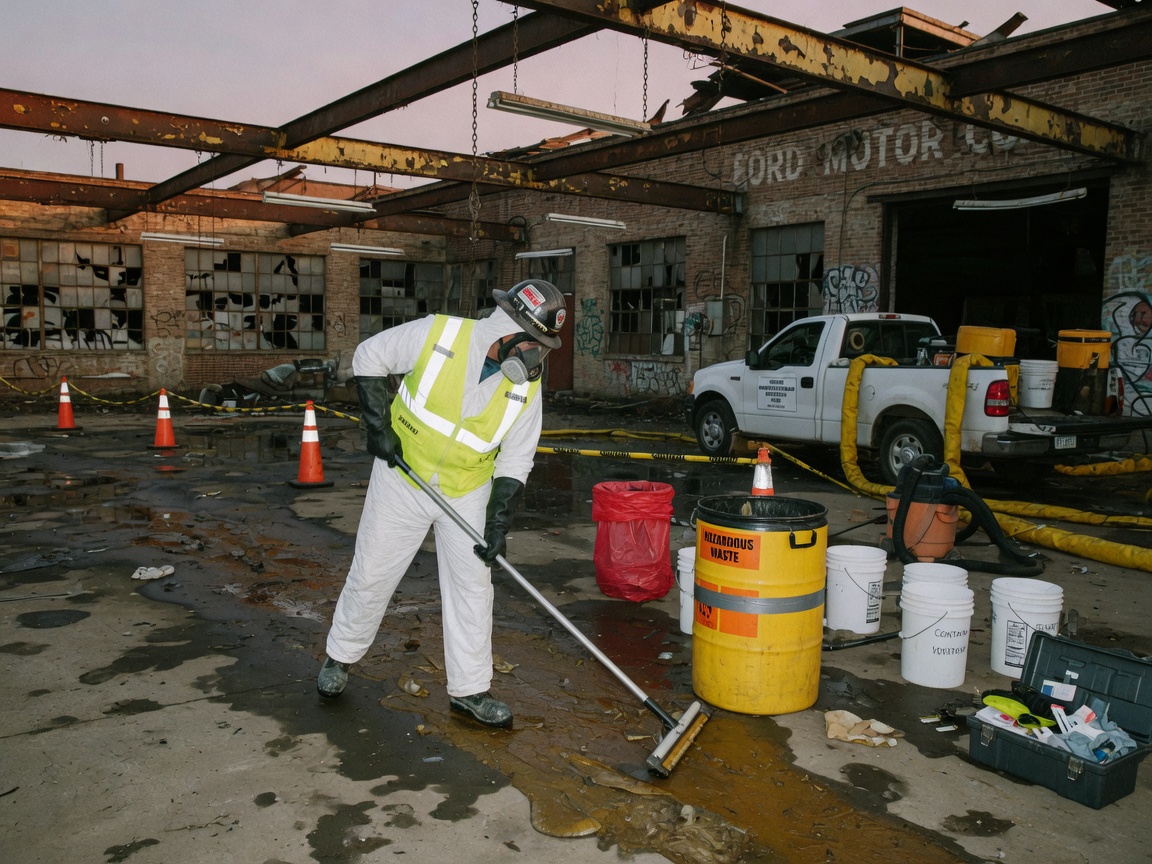
Detroit's older industrial buildings in neighborhoods like Corktown and Eastern Market often feature porous concrete floors and brick walls from the early 1900s that readily absorb blood, hydraulic fluids, and chemical residues. Winter freezes expand these contaminants into cracks, while summer heat accelerates bacterial growth in standing fluids, requiring specialized extraction before standard disinfectants can reach embedded hazards.
Wayne County facilities near Hamtramck and Dearborn frequently involve mixed hazards such as machine oil combined with bodily fluids from crush injuries. Crews must navigate Michigan OSHA guidelines on confined space entry and coordinate with local waste handlers for proper transport of regulated materials out of areas like Palmer Park industrial pockets.
Edge cases include overhead crane accidents in high-bay warehouses where fluids drip through grating into subfloor voids, or forklift tip-overs on uneven terrain near the Detroit River that spread contamination into soil. These demand layered containment and air monitoring that standard janitorial crews lack.
Technicians verify clearance with ATP testing and surface sampling because Detroit's humid summers can mask lingering odors that return weeks later if not fully addressed.
Technician insight
In Detroit, the thing that catches most people out with Industrial Accident Cleanup is the way winter freezes push fluids deeper into the cracked concrete floors of 1920s buildings around Eastern Market and Corktown, so a spill that looks surface-level in January can reappear weeks later once thaw hits.
Hydraulic fluid and injury response in Midtown warehouse
A press operator suffered a severe laceration that mixed blood with hydraulic oil across grating and into the subfloor. We isolated the zone, extracted the combined fluids, treated the porous concrete, and cleared the space for inspection within eight hours so the line could restart the next shift.
Industrial Accident Cleanup Services We Offer
✓Chemical Spill Remediation
Neutralizes and removes industrial solvents, oils, and acids from factory floors while containing runoff that could reach nearby storm drains in Midtown or Woodbridge.
✓Machinery Biohazard Extraction
Clears blood and tissue from presses, conveyors, and robotic arms after crush or amputation incidents without damaging sensitive equipment components.
✓Factory Floor Decontamination
Deep-cleans porous surfaces in older Wayne County plants to prevent bacterial regrowth during warm summer months.
✓Confined Space Accident Cleanup
Handles incidents inside tanks, vats, and pits common in Eastern Market processing facilities with proper ventilation and retrieval protocols.
✓Post-Incident Equipment Sanitization
Restores production lines in Hamtramck auto plants after trauma events so operations can resume without cross-contamination risks.
Industrial Accident Cleanup Cost in Detroit, MI
| Service | Typical Range | What Affects It |
|---|---|---|
| Small contained spill | $600–$1,800 | Single machine or limited floor area, non-hazardous fluids |
| Medium factory incident | $2,200–$5,500 | Multiple surfaces plus equipment, mixed bio and chemical |
| Large multi-area cleanup | $6,000–$12,000 | Spread into subfloors or confined spaces, winter conditions |
| Emergency after-hours response | $400–$900 premium | Added to base job for nights or weekends |
Ranges are typical for Detroit, MI and confirmed with an exact written quote before any work starts.
How it works
- 1
Secure and Assess
Isolate the scene and evaluate hazard types while protecting adjacent production areas in active Detroit facilities.
- 2
Contain and Extract
Apply absorbents and negative air to prevent spread, especially critical during snowy winters when fluids can track across floors.
- 3
Clean and Disinfect
Remove embedded residues from aged concrete and metal using industry-grade agents suited to Michigan industrial stock.
- 4
Verify and Restore
Test surfaces and coordinate waste removal before returning the space to owners or operators.
Pricing
Costs depend on spill volume, surface porosity, and hazard mix; site assessment required for accurate quote.