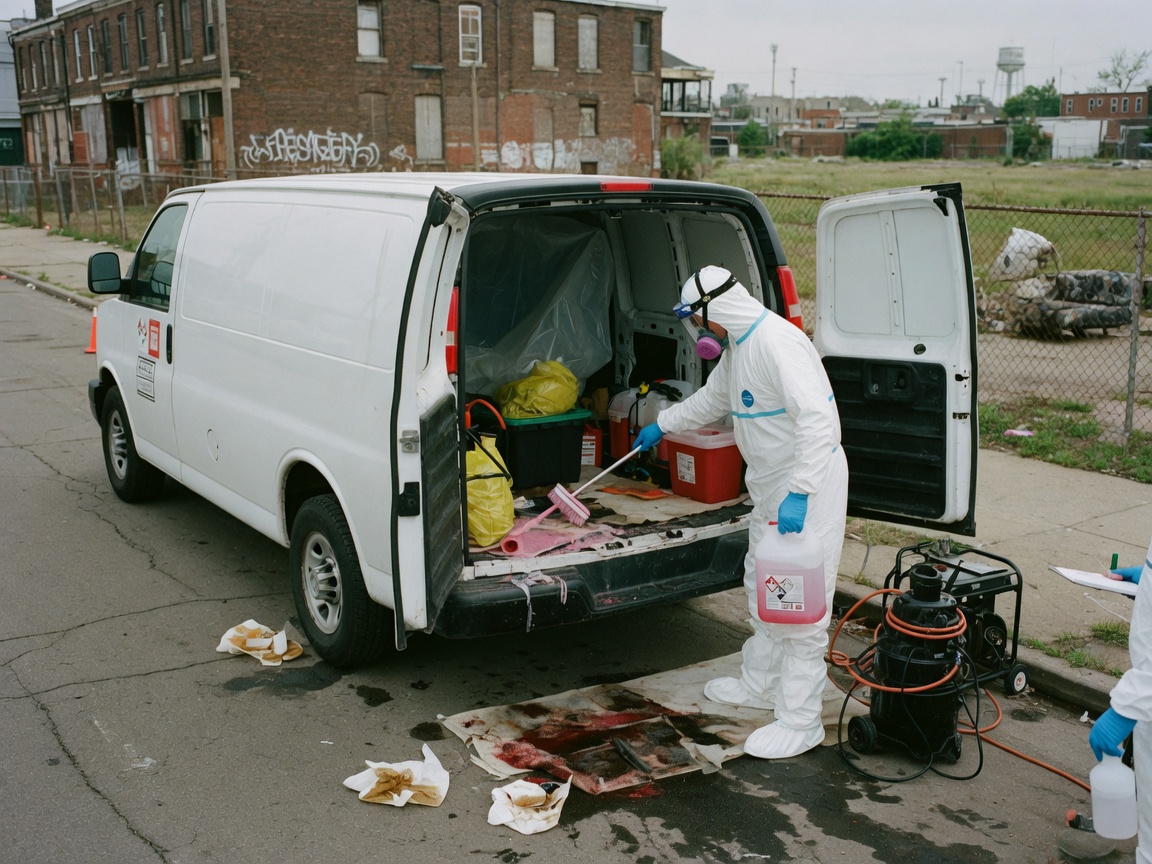
Detroit winters often leave biofluids frozen inside vehicle carpets and seat foam until a warm day causes them to thaw and wick outward. Older sedans and trucks common in neighborhoods like Woodbridge and Boston-Edison frequently have porous headliners and door panels that absorb fluids beyond the reach of standard cleaners. We use enzyme-based digesters followed by HEPA extraction and hospital-grade disinfectants rated for bloodborne pathogens to break down proteins without damaging wiring or electronics.
Wayne County regulations and Michigan OSHA rules require triple-bagging of contaminated materials and documented transport to approved medical-waste facilities. Vehicles parked near Eastern Market or along the riverfront can sit for days in high humidity, accelerating bacterial growth inside trunks and under floor mats. Our crews carry negative-air machines sized for vehicle interiors to capture aerosols during extraction, preventing cross-contamination to adjacent seats or the cargo area.
Many Detroit residents attempt DIY cleaning with household products that only mask odors temporarily. Once the vehicle is moved into a heated garage, residual fluids re-volatilize and create new exposure risks. We document every step with photos and chain-of-custody forms so insurance carriers and law enforcement receive clear records before the vehicle is released back to the owner.
Technician insight
In Detroit the thing that catches most people out with Vehicle Biohazard Remediation is how our cold snowy winters drive fluids deeper into seat foam and carpet padding before they freeze; when the vehicle sits in a Foxtown garage and warms up, the material migrates again and requires full seat removal that most homeowners never expect.
Midtown Sedan After Winter Incident
Blood had pooled under the driver seat of a 2012 sedan left on a Midtown side street through several freeze-thaw cycles. We removed the seat and extracted saturated foam that had wicked into the metal floor pan. Enzyme treatment and negative-air drying prevented odor return once the car was returned to the family.
Vehicle Biohazard Remediation Services We Offer
✓Passenger Car Interior Remediation
Complete removal of blood and tissue from seats, carpets, and headliners in sedans and coupes common on Detroit streets.
✓SUV and Truck Compartment Cleanup
Targeted extraction from cargo areas, third-row seating, and under-floor storage where fluids pool in larger Detroit vehicles.
✓Trunk and Spare-Tire Well Decontamination
Deep cleaning of enclosed trunk spaces where biohazards collect and remain undetected until odors appear.
✓Fleet and Commercial Vehicle Sanitization
Rapid turnaround service for company vans and delivery vehicles that must return to service quickly after incidents.
✓Post-Incident Vehicle Odor Elimination
Enzyme and ozone treatment to neutralize persistent smells after visible material has been removed from vehicle surfaces.
Vehicle Biohazard Remediation Cost in Detroit, MI
| Service | Typical Range | What Affects It |
|---|---|---|
| Standard sedan remediation | $950–$1,800 | Single compartment; price rises if fluids reach trunk or under-seat wiring. |
| SUV or pickup truck | $1,400–$2,600 | Multiple compartments and third-row seating increase labor. |
| Trunk-only cleanup | $650–$1,100 | Lower cost when limited to enclosed cargo space. |
| Odor neutralization add-on | $250–$450 | Ozone treatment after primary remediation. |
Ranges are typical for Detroit, MI and confirmed with an exact written quote before any work starts.
How it works
- 1
On-Site Assessment
Technician inspects all affected surfaces inside the vehicle, notes porous materials, and determines extent of fluid migration.
- 2
Containment and Removal
Biohazardous material is extracted using absorbent powders and HEPA vacuums, then triple-bagged for proper disposal.
- 3
Disinfection and Extraction
Enzyme solutions break down remaining proteins, followed by extraction of treated fluids from carpets and upholstery.
- 4
Verification and Release
ATP testing confirms sanitation levels; vehicle is returned only after documentation is complete for the owner or insurer.
Pricing
Costs depend on vehicle type, amount of contamination, and whether fluids reached sub-floor areas; upfront quotes provided after assessment.